
Why Contractors Reach for Ready to Assemble Cabinets
A remodel lives or dies by its schedule. Framing, plumbing, electrical, tile, and countertops all wait on cabinets, and a two week delay on a cabinet order can push a closing date or blow up a client’s patience. That pressure is exactly why more contractors in Central Florida stock and specify ready to assemble cabinets from The Cabinet Outlet Store of Volusia County instead of waiting on long custom lead times. Flat packed boxes ship fast, arrive intact, and assemble on the jobsite or in the shop, which lets a crew keep moving rather than standing around waiting for a truck.
Ready to assemble, usually shortened to RTA, means the cabinet ships as precut, predrilled panels with the hardware included. A contractor or installer puts the box together using cam locks, dowels, screws, or clips, then hangs and levels it like any other cabinet. The finished product is a full solid box, not a temporary stand in. The difference is entirely in how it travels and how quickly it can be sourced.
The Real Time Savings Behind RTA Cabinets
Custom cabinet shops commonly quote six to ten weeks from measure to delivery, and premium lines can stretch past twelve. RTA lines often move in days because the components already exist in a warehouse. For a contractor juggling three or four active jobs, shaving a month off the cabinet phase means the electrician and the countertop fabricator can be scheduled with confidence instead of guesswork.
Faster Sourcing and Restocking
Flat packed inventory sits on pallets, so a supplier can hand a contractor exactly what a floor plan calls for without milling anything from scratch. If a job needs an extra thirty inch base cabinet after a wall gets moved, that box is usually available the same week. Custom orders rarely allow that kind of last minute flexibility without restarting the clock.
Assembly That Fits Around the Schedule
Because the boxes ship flat, a crew can assemble them during downtime. While tile cures or an inspector is en route, a helper can build out a run of uppers in the garage. That parallel work is impossible with preassembled cabinets that arrive fully built and simply have to wait their turn. A practiced installer can assemble a standard base cabinet in ten to fifteen minutes once the workflow is dialed in.
Lower Freight and Storage Headaches
Preassembled cabinets are mostly air. A truck hauling built boxes carries a fraction of the cabinets that the same truck could carry flat packed, which drives up freight and increases the odds of corner dings and rubbed finishes in transit. Flat cartons stack tight, protect the parts inside foam and cardboard, and move more units per shipment.
Storage on the jobsite matters too. A stack of flat boxes tucks against a wall in a spare bedroom or a garage without dominating the space. Built cabinets eat square footage and get in the way of other trades. On tight condo remodels around Daytona Beach and Ormond Beach, that footprint difference keeps a site workable.
Fewer Damaged Boxes to Argue Over
Damage claims stall projects. When a preassembled cabinet shows up with a cracked face frame, the whole unit gets returned and the schedule slips. With RTA, a single damaged panel can often be swapped without sending back an entire cabinet, so a small mishap does not derail an installation day.
Consistent Quality Contractors Can Stand Behind
Speed only helps if the product holds up after the client moves in. The RTA cabinets worth specifying use plywood boxes, solid wood doors and frames, dovetailed drawer boxes, and soft close hardware rather than thin particleboard and staples. Those construction details are what separate a cabinet that survives a decade of Florida humidity from one that swells and sags.
For kitchen projects, contractors lean on lines that offer full overlay doors, adjustable hinges, and matching filler and trim pieces so the finished run looks integrated rather than pieced together. You can see the range of quality kitchen cabinets that pros use to standardize their builds and avoid surprises on install day.
Bathrooms bring their own demands, from vanity heights to moisture exposure around sinks. Compact footprints and clean door styles let a contractor finish a powder room or a primary bath without special ordering, and the selection of stylish bathroom cabinets covers the sizes that come up most often in Volusia County homes.
How RTA Cabinets Protect a Contractor’s Margin
Labor is the largest line item on most remodels, and idle labor is pure loss. Every day a crew waits on cabinets is a day of overhead with no progress to bill. RTA sourcing compresses that dead time, which means more jobs completed per quarter and a healthier margin on each one.
Predictable Pricing on Bids
Flat packed lines carry published, stable pricing, so a contractor can build an accurate bid without waiting on a custom quote that may change. That predictability protects the estimate. When material costs are locked and known, a contractor can price the job tighter and still hit target profit.
Room to Upsell Finishes
Because the box cost stays reasonable, there is budget left for the upgrades clients actually notice. Crown molding, a furniture style island, glass door inserts, or a contrasting vanity color can be added without breaking the number the homeowner already approved. That flexibility turns a basic remodel into a referral generating result.
A Practical Workflow for RTA on the Jobsite
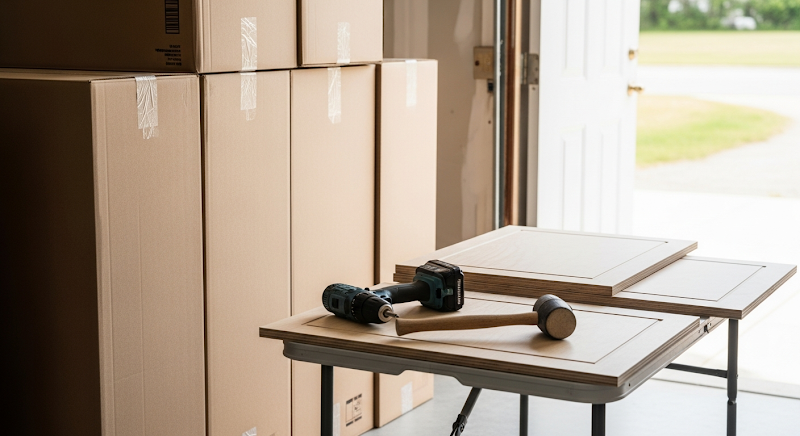
The contractors who get the most from RTA treat assembly as a defined station rather than an afterthought. Set up a folding table, a cordless drill with a clutch, a rubber mallet, and a square, then group the cartons by cabinet so parts do not migrate between boxes. A short assembly line beats building one cabinet start to finish before opening the next.
Dry fit before glue. Snug the cam locks, check the box for square with a tape measure across both diagonals, then set the back panel to lock everything in place. A box that reads square across the diagonals will hang plumb and accept doors that sit even, which saves fussing later when the countertop template arrives.
Label the finished boxes with their wall location in pencil so the install crew is not guessing. Seeing how finished runs come together helps too, and you can browse our project gallery for real kitchens and baths that started as flat packed cartons and ended as clean, level installations.
Common Mistakes That Cancel Out the Time Savings
The most frequent error is skipping a careful count on delivery. Open the cartons, confirm every panel and hardware bag, and flag shortages immediately so replacements arrive before install day rather than during it. A missing toe kick discovered at hour three is a lost afternoon.
Overtightening cam locks and stripping predrilled holes is another avoidable setback. Use a clutch setting and hand finish the last quarter turn. Rushing the mechanism to save two minutes can crack a panel and force a part swap that costs far more than the time saved.
Measuring and Filler Planning
RTA boxes come in standard increments, so walls that are out of square or dimensions that fall between sizes need filler strips and scribe planning up front. Map the run on paper, account for appliance clearances, and order fillers with the original shipment. Solving this at the design stage keeps assembly day smooth.
Who Benefits Most From RTA Cabinets
General contractors, kitchen and bath remodelers, flippers, property managers, and rental owners all lean on RTA for different reasons. A flipper cares about speed and cost per unit. A remodeler cares about matching a client’s style without a long wait. A property manager needs to turn a unit fast between tenants. The same flat packed system serves all of them.
Handy homeowners tackling their own kitchen also fit the model, since the boxes assemble with common tools and clear hardware. Whether a project is a single vanity or a full custom kitchen, a supplier who stocks a deep range keeps the work moving, and you can book a free quote to line up materials and get a plan mapped to your timeline before the demolition starts.
The Bottom Line for Time Conscious Builds
RTA cabinets earn their place on jobsites by collapsing lead times, cutting freight, protecting finishes, and keeping bids predictable, all without giving up plywood boxes and solid doors. For contractors working across Holly Hill and the wider Volusia County market, that combination is the difference between a job that flows and a job that stalls. Build the workflow once, source from a supplier who keeps inventory ready, and the schedule stops fighting you.
Frequently Asked Questions
How long does it take to assemble one RTA cabinet?
An experienced installer assembles a standard base or wall cabinet in roughly ten to fifteen minutes once a workflow is set up. Setting up an assembly station with a drill, mallet, and square speeds up a full run considerably.
Are ready to assemble cabinets as durable as preassembled ones?
Quality RTA cabinets use the same plywood boxes, solid wood doors, dovetailed drawers, and soft close hardware found in preassembled lines. Durability depends on materials and correct assembly, not on whether the cabinet shipped flat.
Do RTA cabinets hold up in Florida humidity?
Plywood construction with solid wood doors and frames resists the swelling and warping that thin particleboard suffers in humid coastal conditions. Proper sealing around sinks and good ventilation further protect the finish over time.
Can contractors get matching fillers, trim, and molding?
Yes. Reputable RTA lines include fillers, scribe molding, toe kicks, crown, and finished panels that match the cabinet doors, so a run reads as one integrated design rather than a set of mismatched boxes.
What tools are needed to build RTA cabinets on site?
A cordless drill with a clutch, a rubber mallet, a square, a tape measure, and wood glue cover most assemblies. Grouping parts by cabinet and dry fitting before gluing prevents mistakes and speeds the process.
How much faster is RTA compared to custom cabinets?
Custom orders often run six to twelve weeks, while stocked RTA cabinets can arrive within days. That difference lets contractors schedule countertops, electrical, and plumbing with far more confidence.